Annyeonghaseyo, fellow Seoul adventurers! If you’re anything like me, landing at Incheon International Airport (ICN) after a long flight has you buzzing with excitement, but also wondering about the quickest, most stress-free way to dive into the city’s vibrant neighborhoods. And if Seongsu-dong is on your radar – and trust me, it absolutely should be – then you’re in the right place. This guide is all about helping you navigate your arrival smoothly and efficiently, ensuring you know exactly how to get from Incheon Airport to Seongsu-dong by public transport, feeling like a local from the moment you land.
I’ve made this journey countless times, and I know firsthand that figuring out public transportation in a new country can feel a bit daunting. But don’t worry, I’m here to walk you through every step, from grabbing your essential T-Money card to zipping through the Seoul subway system, so you can start exploring Seongsu’s industrial-chic cafes and trendy boutiques without a hitch.
Quick Answer: Key Takeaways for Your Journey
- The most efficient public transport options are the AREX train combined with the Seoul subway, or a direct airport bus.
- A T-Money card is absolutely essential for seamless travel on all public transport, including buses and subways, and can be purchased and topped up at the airport.
- Expect the journey to Seongsu-dong to take approximately 1 hour 20 minutes to 1 hour 40 minutes by train and subway, and around 50 minutes to 1 hour 20 minutes by airport bus, depending on traffic.
- Fares typically range from ₩5,500 to ₩8,000 for the AREX + subway combination and around ₩16,000 to ₩17,500 for the airport bus.
- Download Naver Map or KakaoMap for real-time navigation, as Google Maps isn’t as reliable for public transport in Korea.
Heads up: this post contains affiliate links. If you make a purchase through one, I may earn a small commission at no extra cost to you — thanks for supporting the blog!
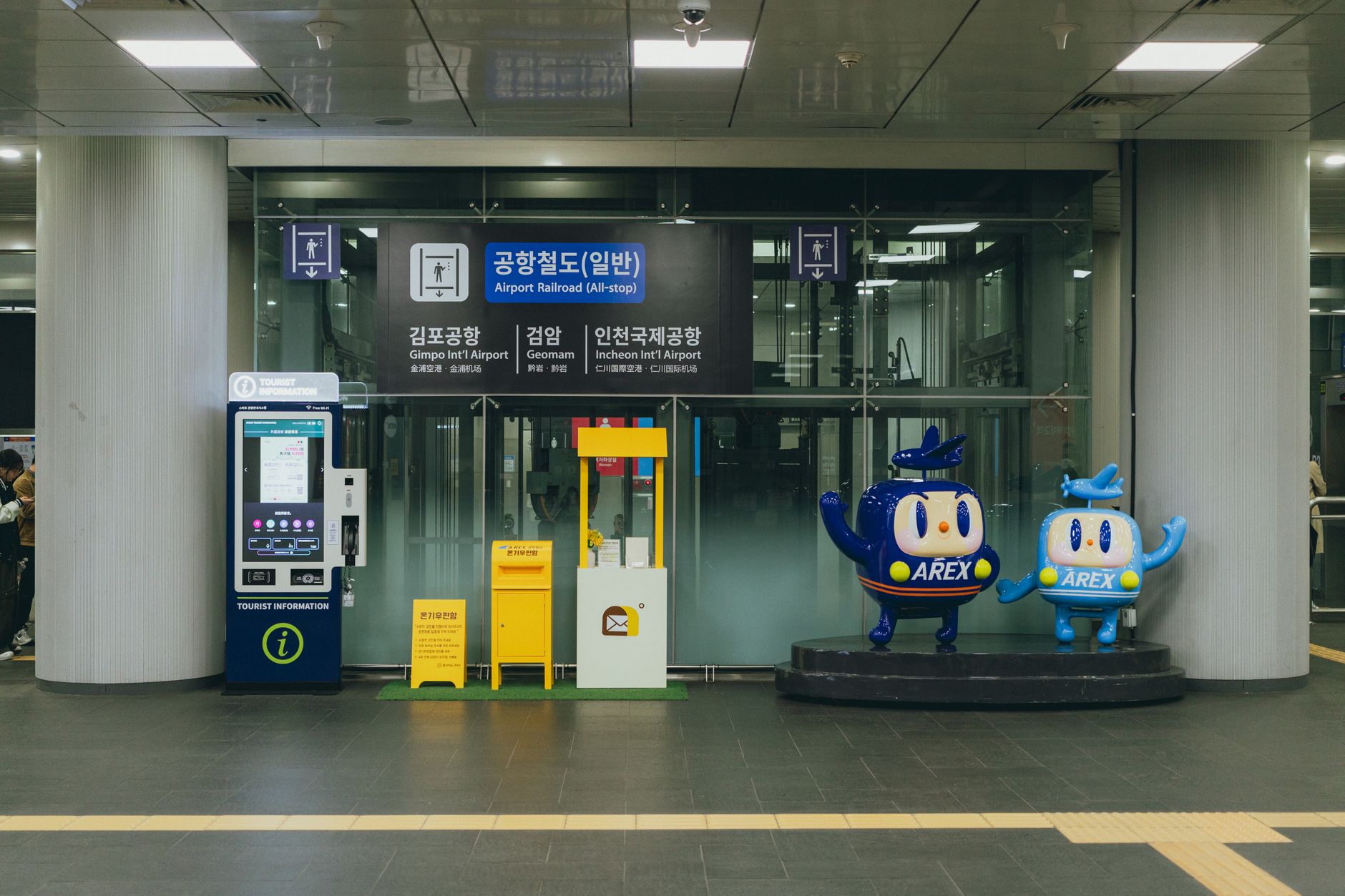
Photo by Theodore Nguyen on Pexels
Why Seongsu-dong is Absolutely Worth the Journey
Before we dive into the nitty-gritty of transportation, let’s talk about why Seongsu-dong should be at the top of your Seoul itinerary. Often called the “Brooklyn of Seoul,” this neighborhood has undergone an incredible transformation from an industrial shoemaking district into one of the city’s trendiest hotspots. Picture former factories and warehouses reimagined as stunning cafes, independent boutiques, art galleries, and pop-up stores showcasing the latest in K-beauty and fashion.
When I first started visiting Seoul years ago, Seongsu was still a hidden gem, known mostly to locals for its utilitarian workshops. Now, its raw, industrial-chic aesthetic, combined with a vibrant creative energy, makes it utterly captivating. You can spend hours wandering its streets, stumbling upon a minimalist coffee shop serving a perfect pour-over, or finding a unique design store that feels like a treasure hunt.
It’s a place where tradition subtly meets innovation, offering a different side of Seoul compared to the bustling tourist areas. From the tranquil Seoul Forest nearby to the lively Yeonmujang-gil with its constant rotation of pop-ups, Seongsu-dong truly offers something for everyone.
Your Best Bet: AREX + Seoul Subway
For most travelers, combining the Airport Railroad Express (AREX) with the Seoul subway system is the most balanced option in terms of cost, speed, and convenience. This route offers a fantastic way to experience Korea’s world-class public transportation network right from the start. It typically takes about 1 hour and 20 minutes to 1 hour and 40 minutes, depending on your transfer times and the specific subway lines you take.
Step 1: From Incheon International Airport (ICN) to Seoul Station or Hongik University Station via AREX
Once you’ve cleared customs and collected your luggage at Incheon International Airport (ICN), follow the clear signs for the “Airport Railroad” or “AREX.” You’ll find the AREX station in the basement levels of both Terminal 1 and Terminal 2.
You have two main AREX options: the Express Train or the All Stop Train.
- AREX Express Train: This is the fastest option, taking about 43 minutes to go directly from ICN to Seoul Station, with no stops in between. It’s a bit pricier, around ₩13,000, and you get a reserved seat, which is lovely after a long flight.
- AREX All Stop Train: This train makes several stops, including important hubs like Hongik University (Hongdae) and Gimpo International Airport, before reaching Seoul Station. The journey to Seoul Station takes about 56 to 60 minutes and costs between ₩4,150 and ₩4,750, making it a more budget-friendly choice.
My personal recommendation? If you’re heading to Seongsu-dong, the All Stop Train to Hongik University Station is often the most convenient. While the Express Train gets you to Seoul Station faster, the transfer from Hongik University Station to Seongsu-dong on Subway Line 2 is usually more straightforward.
Don’t Forget Your T-Money Card!
Before you board any public transport, you’ll want to get your hands on a T-Money card. This rechargeable transit card is your best friend for getting around Seoul. You can purchase one from convenience stores like CU, GS25, or 7-Eleven located in the airport’s arrival halls or near the AREX station. There are also T-Money vending machines available. The card itself costs around ₩4,000 and then you’ll need to load it with cash. I usually start with ₩20,000-₩30,000, which is plenty for a few days of exploring.
Remember, topping up your T-Money card usually requires cash, so make sure to hit an ATM at the airport before heading to the subway.
Step 2: Transferring to the Seoul Subway for Seongsu-dong
Once you arrive at either Seoul Station or Hongik University Station via AREX, you’ll transfer to the Seoul subway system. Both stations are major hubs with excellent connections, but the transfer process will differ slightly.
From Hongik University Station to Seongsu Station
If you took the AREX All Stop Train to Hongik University Station (Hongdae), your transfer couldn’t be easier. Hongik University Station is on Subway Line 2 (the green line), which is the same line that serves Seongsu Station. Simply follow the signs within the station to transfer to Line 2, heading in the direction of Sinchon/Euljiro 1-ga. It’s a direct ride, usually taking about 30 minutes, and you won’t need to transfer lines again.
From Seoul Station to Seongsu Station
If you arrived at Seoul Station (whether by Express or All Stop AREX), you’ll need to make a transfer to reach Seongsu-dong. The most common route involves taking Subway Line 4 (light blue line) from Seoul Station to Dongdaemun History & Culture Park Station, and then transferring to Subway Line 2 (green line) towards Seongsu. This journey, including transfers, typically takes about 20 to 35 minutes.
The Seoul subway system is incredibly well-signed in English, but navigating large interchange stations can still be a bit of a maze with luggage. Don’t be afraid to ask for directions if you’re unsure – most Koreans are incredibly helpful.
Photo by Magda Ehlers on Pexels
Alternative: The Airport Bus to Seongsu-dong
If you prefer a more direct, single-mode of transport, or if you have a lot of luggage and prefer not to deal with transfers, the airport bus is a fantastic alternative. Several airport limousine buses operate from Incheon International Airport to various parts of Seoul, including Seongsu-dong.
The Airport Limousine Bus 6013 is a popular choice that offers a direct route to the Seongsu-dong area. It departs from Incheon International Airport Terminal 1 (usually at stop 4B on the first floor) and Terminal 2 (at B1). The bus journey takes approximately 52 minutes to 1 hour and 20 minutes, depending on traffic, and will drop you off at stops like “Seongsu-dong Emart”.
The fare for the airport bus is typically around ₩16,000 to ₩17,500. You can purchase tickets at designated ticket booths outside the passenger terminals or pay directly with your T-Money card. Buses usually run every 30 minutes, so you won’t have to wait too long.
While the bus is often slightly more expensive than the train-subway combo, the convenience of a direct route, often with comfortable seating and dedicated luggage space, can be a major plus, especially after a long flight.
AREX + Subway vs. Airport Bus: A Quick Comparison
To help you decide, here’s a quick overview:
| Method | Approx. Travel Time | Approx. Cost (KRW) | Transfers | Pros | Cons |
|---|---|---|---|---|---|
| AREX + Subway | 1h 20m – 1h 40m | ₩5,500 – ₩8,000 | 1-2 (e.g., AREX to Hongdae, then Line 2) | Cheaper, avoids traffic, frequent service | Requires transfers, can be crowded with luggage |
| Airport Bus (6013) | 50m – 1h 20m | ₩16,000 – ₩17,500 | None (direct to Seongsu area) | Direct, comfortable, luggage space | More expensive, subject to traffic delays |
Essential Travel Tips for a Smooth Ride
To make your journey from Incheon International Airport to Seongsu-dong as smooth as possible, here are a few insider tips:
Master Your T-Money Card
Seriously, don’t underestimate the power of the T-Money card. It’s not just for subways and buses; you can use it to pay for taxis and even make small purchases at convenience stores! This contactless card saves you from fumbling with cash and ensures you get transfer discounts between different modes of public transport. When you need to top up, look for machines in any subway station (they have English options!) or simply hand your card and cash to a cashier at any convenience store like CU, GS25, or 7-Eleven.
Download Local Navigation Apps
While Google Maps is great in many parts of the world, it often struggles with public transport directions and walking routes in Korea. For the most accurate, real-time navigation, you’ll want to download either Naver Map or KakaoMap. Both are excellent, but many foreigners find Naver Map particularly helpful for its detailed English directions and subway information, including exit numbers and estimated walking times within large stations. KakaoMap is also great, especially for its visual presentation and real-time bus tracking. I often use both!
Mind Your Luggage
If you’re traveling with large suitcases, keep in mind that the Seoul subway can get very crowded, especially during peak hours (roughly 7:30 AM-9:30 AM and 6:00 PM-7:30 PM on weekdays). While the AREX trains have dedicated luggage racks, navigating transfers on the subway with oversized bags can be a challenge. If you’re arriving during rush hour with a lot of luggage, the airport bus might be a more comfortable option, or consider taking the subway during off-peak times.
Stay Connected
Having a local SIM card or a portable Wi-Fi device is incredibly useful for navigating and staying in touch. You can pick these up at Incheon Airport upon arrival. Being able to access your navigation apps and look up information on the go will significantly reduce any travel stress.
Speaking of staying connected and exploring all that Seoul has to offer, if you’re planning your trip around the beautiful cherry blossom season, you’ll definitely want to check out our 2024 Seoul Cherry Blossom Forecast: Peak Bloom Dates Revealed for the best times and spots to see the blossoms!
Photo by Theodore Nguyen on Pexels
Navigating Seongsu-dong Upon Arrival
Once you arrive at Seongsu Station (성수역), you’re right in the heart of the action. Take Exit 3 or 4, and you’ll find yourself immediately surrounded by the neighborhood’s unique charm. From there, it’s incredibly walkable, perfect for exploring on foot. The main areas of interest, like Cafe Street, Yeonmujang-gil, and the streets bordering Seoul Forest, are all within easy reach.
You’ll notice the distinct blend of old and new, with renovated brick buildings standing alongside modern concept stores. Don’t be afraid to wander down the smaller alleys; that’s where you’ll often discover the most charming hidden cafes and independent shops. Seongsu-dong is designed for exploration, so take your time, grab a coffee, and soak in the atmosphere.
Wrapping Up Your Seoul Adventure
Getting from Incheon Airport to Seongsu-dong by public transport might seem like a lot to figure out when you’re fresh off a plane, but I promise it’s more straightforward than it sounds. With a T-Money card in hand and a reliable navigation app, you’ll be zipping through Seoul like a seasoned traveler in no time. Whether you choose the efficiency of the AREX and subway or the direct comfort of the airport bus, you’re in for an unforgettable experience in one of Seoul’s most dynamic neighborhoods.
Seongsu-dong truly embodies the innovative spirit of Seoul, offering a delightful mix of culture, creativity, and incredible eats. So take a deep breath, embrace the adventure, and get ready to fall in love with this incredible city. Happy travels!