Embarking on a journey to learn Korean can unlock a deeper appreciation for Korea’s rich culture, vibrant cities, and incredible food. For travelers planning a trip or those already navigating the bustling streets of Seoul, having a grasp of fundamental phrases can transform your experience from mere observation to genuine connection. This guide cuts through the noise to recommend the most effective digital tools, ensuring you spend less time searching and more time speaking. You’ll discover which apps truly help you master essential vocabulary and grammar, making your time in Korea even more rewarding.
Quick Answer:
- Duolingo is a popular choice for absolute beginners focusing on gamified lessons and foundational vocabulary.
- Memrise excels in practical vocabulary acquisition through native speaker videos and spaced repetition.
- Tandem connects you with native Korean speakers for real-time language exchange.
- Talk To Me In Korean (TTMIK) offers structured lessons and comprehensive grammar explanations, ideal for self-study.
- Naver Dictionary provides invaluable translation and example sentences for quick lookups.
Heads up: this post contains affiliate links. If you make a purchase through one, I may earn a small commission at no extra cost to you — thanks for supporting the blog!

Why Learning Basic Korean Makes Your Trip Better
Navigating Seoul, even with widespread English signage, becomes significantly smoother when you can engage with locals in their language. Simple greetings, ordering food, or asking for directions can open doors to more authentic interactions and discoveries. Beyond mere practicality, understanding even a little Korean shows respect for the local culture, often resulting in warmer responses and more helpful assistance from residents. It transforms routine transactions into meaningful cultural exchanges, enriching every moment of your journey.
For those diving into the daily rhythms of Korean life, particularly when dealing with everyday tasks like shopping or understanding local etiquette, even a few key phrases can make a world of difference. Understanding the nuances of politeness levels in Korean speech, for instance, can help you avoid common misunderstandings and foster positive interactions.
Essential Features to Look for in Beginner Korean Apps
When selecting a self-study Korean app, prioritize features that cater specifically to foundational learning. A good app should offer a clear path from Hangul (the Korean alphabet) mastery to basic conversational skills. Look for robust audio components, as pronunciation is critical in Korean, and interactive exercises that reinforce grammar rules.
Apps that incorporate spaced repetition systems (SRS) are particularly effective for vocabulary retention, ensuring that words and phrases stick in your long-term memory. Additionally, consider apps that provide cultural context alongside language lessons, as understanding the “why” behind certain phrases can deepen your comprehension and usage.
- Hangul Introduction: Clear, interactive lessons for reading and writing the Korean alphabet.
- Pronunciation Guides: Native speaker audio and phonetic breakdowns for accurate speech.
- Vocabulary Building: Thematic word lists and flashcards with spaced repetition.
- Grammar Explanations: Simple, digestible explanations of core Korean grammar structures.
- Interactive Exercises: Quizzes, speaking practice, and sentence construction tasks.
- Offline Access: The ability to download lessons for use without an internet connection, especially useful when exploring.
Top-Tier Apps for Learning Basic Korean Language
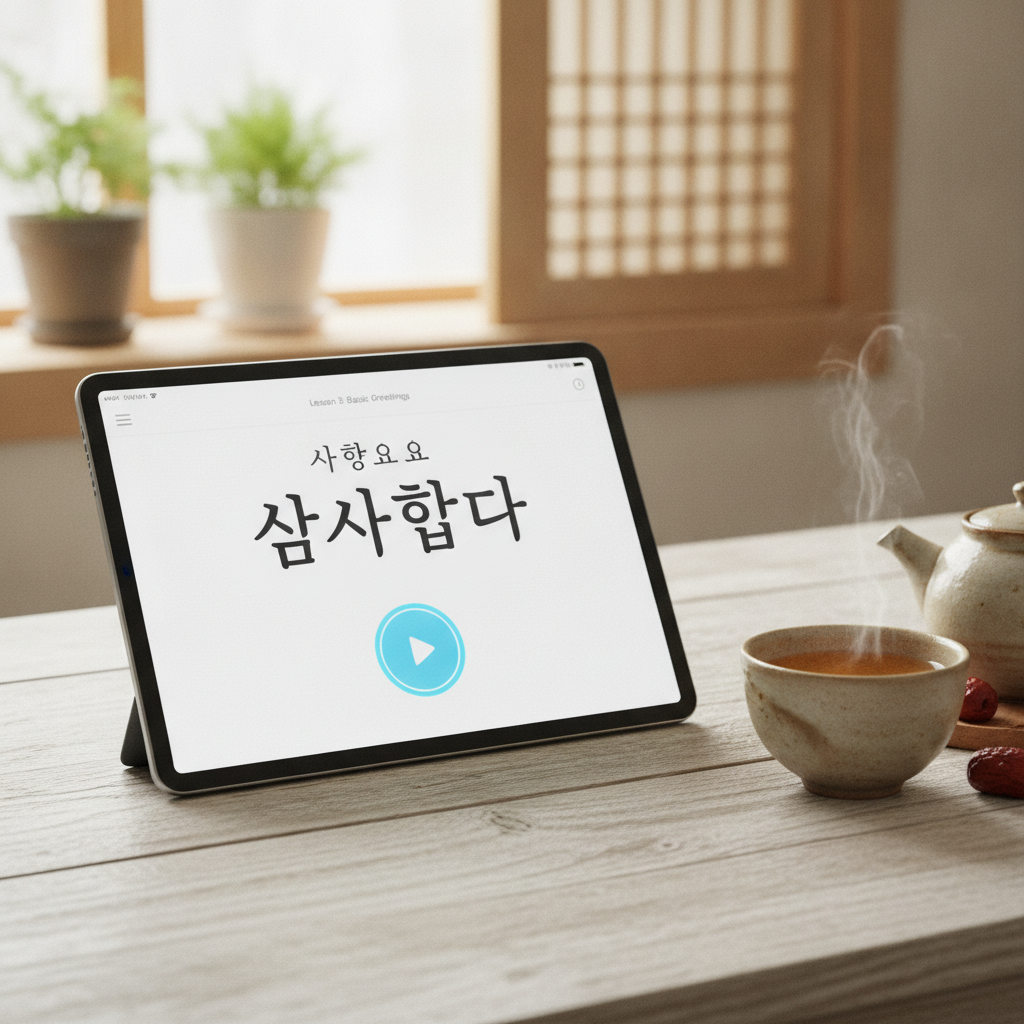
For those seeking the best apps for learning basic Korean language, several stand out for their effectiveness and user-friendly interfaces. Each offers a unique approach, catering to different learning styles and goals. Whether you’re aiming for quick conversational phrases or a deeper dive into grammar, there’s an app designed for you.
Duolingo: Gamified Learning for Absolute Beginners
Duolingo remains a perennial favorite for its engaging, gamified approach to language learning. It’s particularly strong for absolute beginners who benefit from its structured, bite-sized lessons. Users report that the app makes learning Hangul and foundational vocabulary feel less daunting through points, streaks, and leaderboards. While it provides a solid introduction, some advanced learners find its grammar explanations to be less in-depth compared to other resources.
Memrise: Contextual Vocabulary with Native Speakers
Memrise shines in its focus on practical vocabulary and phrases, enhanced by thousands of video clips featuring native Korean speakers. This exposure to authentic pronunciation and usage in context is invaluable for developing an ear for the language. The app’s use of spaced repetition helps solidify new words, making it an excellent choice for building a robust Korean vocabulary. Reviewers often highlight its effectiveness for memorizing useful phrases for travel.
Talk To Me In Korean (TTMIK): Comprehensive Structured Lessons
Talk To Me In Korean (TTMIK) is widely regarded as a cornerstone for self-study Korean apps. While it started as a website, its accompanying app provides access to a vast library of audio lessons, textbooks, and workbooks that systematically cover Korean grammar from beginner to advanced levels. It’s ideal for learners who prefer structured lessons and detailed explanations over purely memorization-based methods. Many users praise its clear explanations and logical progression.

Naver Dictionary: Your Indispensable Korean Companion
While not a traditional learning app, Naver Dictionary is an absolutely indispensable tool for anyone learning or using Korean. It offers comprehensive definitions, example sentences, and native speaker audio for virtually any Korean word or phrase. It’s far more robust than standard translation apps and serves as a crucial reference for understanding nuances and usage. Many students and travelers keep it open constantly for quick lookups and to verify pronunciation.
Tandem: Practice with Native Korean Speakers
For those ready to put their learning into practice, Tandem connects you with native Korean speakers for language exchange. This app facilitates real-time conversations via text, voice, or video chat, providing invaluable exposure to natural speech patterns and cultural insights. It’s an excellent way to gain confidence in speaking and to receive direct feedback on your pronunciation and grammar from native speakers. Users often form lasting friendships through the platform.
| App Name | Primary Focus | Best For | Key Feature |
|---|---|---|---|
| Duolingo | Gamified lessons, basic vocabulary | Absolute beginners, casual learners | Points, streaks, interactive exercises |
| Memrise | Practical vocabulary, pronunciation | Travelers, vocabulary builders | Native speaker videos, spaced repetition |
| Talk To Me In Korean (TTMIK) | Structured grammar, comprehensive lessons | Dedicated self-study, grammar enthusiasts | Systematic curriculum, detailed explanations |
| Naver Dictionary | Translation, contextual usage | Reference, quick lookups, advanced learners | Extensive examples, native audio |
| Tandem | Language exchange, conversational practice | Speaking practice, cultural immersion | Native speaker connections, real-time chat |

Beyond the Apps: Maximizing Your Korean Learning in Seoul
While these apps provide an excellent foundation, truly immersing yourself in the language requires stepping beyond your screen. Seoul offers countless opportunities for practical application. Engage with shopkeepers, try ordering your coffee in Korean, or simply listen to conversations around you. Even small attempts are often met with encouragement.
For those staying for an extended period, consider joining a local language exchange group or even taking a short-term intensive class. These environments provide structured practice and the chance to make new friends. Remember that consistency is key; dedicating even 15-30 minutes daily to your chosen app or practice method will yield significant results over time.
And when it comes to experiencing Seoul comfortably, finding the right accommodation is essential. A central and well-regarded option is the New Seoul Hotel, known for its convenient location and welcoming atmosphere, making it a great base for your language-learning adventures and urban explorations.
Check Current Price & Availability for New Seoul Hotel →
Exploring local markets like Gwangjang Market or Dongdaemun, where English might be less common, presents perfect opportunities to practice your beginner Korean apps knowledge in real-world scenarios. Don’t be afraid to make mistakes; they are a natural part of the learning process. Additionally, understanding practical aspects of living in Korea, such as How to Recycle in Korea: 4 Must-Know Rules for Tourists, can also deepen your cultural immersion and daily interactions.

Where to Book New Seoul Hotel at the Best Price
For travelers prioritizing comfort and convenience in the heart of Seoul, booking the New Seoul Hotel is a smart choice. Agoda is a highly recommended platform for securing your stay, offering competitive pricing and a user-friendly interface that makes comparing options straightforward. Many travelers find that booking through established online travel agencies like Agoda often provides better rates and more flexible cancellation policies than booking directly.
The hotel is consistently praised for its central location, putting you within easy reach of major attractions and public transportation, which is crucial for maximizing your time in the city. While prices can vary based on season and demand, a quick search on Agoda will provide current rates and availability, often with options for different room types. It’s always a good idea to check current price and availability well in advance, especially during peak travel seasons, to secure the best deals.
Frequently Asked Questions
Q: How long does it take to learn basic Korean for travel?
A: Most learners can acquire enough basic Korean phrases for travel and simple interactions within 3-6 months of consistent daily study, dedicating 15-30 minutes per day. This timeframe is sufficient for understanding common greetings, ordering food, asking for directions, and basic shopping. Progress largely depends on the consistency of your practice and the quality of the resources used.
Q: Are free Korean learning apps effective, or do I need a paid subscription?
A: Many free Korean learning apps, such as Duolingo and the basic versions of Memrise, are highly effective for building a strong foundation in Hangul, vocabulary, and basic grammar. While paid subscriptions often unlock additional features, advanced lessons, or an ad-free experience, beginners can make significant progress with free resources alone. Combining free apps with resources like YouTube tutorials or the free content from Talk To Me In Korean can be very powerful.
Q: What are common mistakes beginners make when learning Korean?
A: A common mistake is neglecting pronunciation and solely focusing on reading and writing Hangul, which can lead to misunderstandings in spoken Korean. Another frequent error is not practicing regularly or shying away from speaking with native speakers. Additionally, many beginners overlook the importance of honorifics and politeness levels, which are crucial for appropriate communication in Korean society.
Q: Should I focus on learning Hangul first, or can I start with phrases?
A: It is highly recommended to learn Hangul first. Hangul is a phonetic alphabet that is remarkably easy to learn, often taking only a few hours to a few days to master the basics. Understanding Hangul will significantly aid in correct pronunciation, make vocabulary acquisition much faster, and allow you to read signs and menus, which is invaluable for travelers in Korea.
Q: How can I practice speaking Korean if I don’t have a native speaker nearby?
A: If a native speaker isn’t readily available, apps like Tandem or HelloTalk connect you with language partners worldwide for free. You can also practice speaking by repeating after native speaker audio in learning apps, recording yourself, and comparing it to the original. Watching Korean dramas and movies with subtitles and trying to mimic phrases is another effective method for improving your spoken Korean.